.svg)







































Promotions and hiring see increases, while 3-month outlook dips
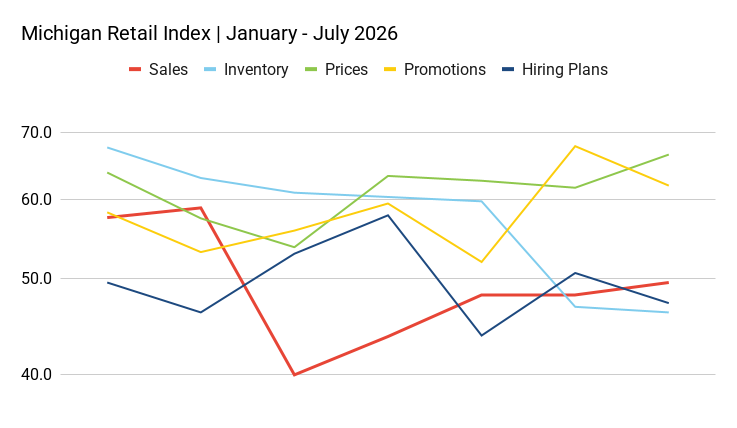
Michigan Retailers Association reports that the April 2026 Michigan Retail Index score came in at 43.7, down from March 2026’s 48.1. Dropping nearly five points from last month’s score, this Retail Index is significantly lower than that of April 2025’s score of 59.4, which was the highest score in the past 12 months.
The 100-point index provides a snapshot of the state’s overall retail industry. With higher numbers indicating stronger activity, index values above 50 generally indicate positive sales activity and values below 50 indicate declining trends. The seasonally-adjusted performance index is conducted by Michigan Retailers Association (MRA) in cooperation with the Federal Reserve Bank of Chicago’s Detroit branch.
The 100-point index provides a snapshot of the state’s overall retail industry. With higher numbers indicating stronger activity, index values above 50 generally indicate positive sales activity and values below 50 indicate declining trends. The seasonally-adjusted performance index is conducted by Michigan Retailers Association (MRA) in cooperation with the Federal Reserve Bank of Chicago’s Detroit branch.
This seasonally-adjusted index reflects how current retail sales compare to a historical average for each month. Forty-four percent of retailers noted an increase in April sales over March, while 53% of Michigan retailers surveyed reported a sales decrease, and 3% reported no change.
Seasonal Hiring Ramps Up
Seasonal hiring is in full swing, with the current hiring plans index score showing a significant increase, landing at 57.8 in April, compared to 43.8 in March. Many retailers increase staffing during the summer months to support seasonal travel and tourism. The 3-month hiring plans outlook is also up over last year at 56.1 for 2026, compared to 51.3 in April 2025.
“While severe weather and storm damage continue to impact many businesses across the state, we are hopeful that May will bring some relief for our local retailers,” said William J. Hallan, President and CEO of the Michigan Retailers Association. “Sales trends have continued to decline since the beginning of the year, but retailers are doing all that they can to keep costs manageable for shoppers.”
The price index increased less than one point to 63.3 in April, which is higher than the previous year’s score by nearly five points, but reflects improved stability compared to 2025’s score volatility. Since January 2026, the pricing index has seen less than five points of fluctuation, in contrast with the more than 15-point swing experienced from March to June 2025.
3-Month Outlook
When asked about their sales outlook for the next three months (May through July), 70% of retailers predicted their sales would increase, 18% of retailers anticipate their sales to decline, and 12% anticipate no change. That results in an index rating of 67.3 for the 3-month outlook, a strong indicator for optimism, but another decrease from the 3-month prediction last month at 69.7.
Promotion Outlook Climbs
The promotional three-month outlook score increased nearly eight points to 74.2 in April after declining in March. As the highest score of the year, and almost four points higher than last April, this month’s promotion score means retailers are planning to run an increased number of promotions in the coming three months.
“Michigan’s retailers’ optimism presses on with hope for a strong summer sales season, despite a slow winter and spring,” Hallan shared. “The promotion outlook is the highest it’s been all year, indicating that the next quarter will be filled with specials and deals to get customers shopping this summer. We strongly encourage shoppers to be intentional this summer and support local retail whenever possible.”
Shoppers are asked to “Keep your money in Michigan,” by shifting at least 10% of out-of-state or online purchases to a Michigan-based business. This shift, outlined in the 2025 Buy Nearby Economic Impact Study, would help increase Michigan’s economic activity by over $1 billion. The study highlights additional impacts, including increased employment by nearly 12,000 jobs, and a $557 million boost to labor income for Michiganders. Michigan is home to more than 90,000 retail establishments employing over 500,000 workers.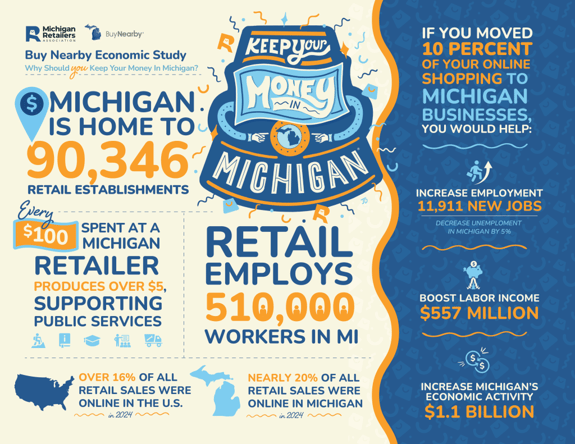
.svg)